
This week, media across Central Asia highlighted a landmark period of constitutional transition and strategic humanitarian diplomacy. In Kazakhstan, President Kassym-Jomart Tokayev officially signed the decree bringing the nation’s new Constitution into force following a decisive referendum, while international economic assessments confirmed the country's entry into the world's top 40 economies by GDP (PPP). Diplomatic activity remained high as Nowruz celebrations served as a backdrop for regional unity and high-level engagement, including a significant state visit by Turkmenistan’s National Leader to Beijing to solidify long-term energy and "One Belt, One Road" partnerships. In the environmental sector, Uzbekistan demonstrated the tangible progress of its Green Transition goals with a record increase in green power generation and new industrial recycling pacts with China. However, the escalating crisis in the Middle East necessitated a swift and coordinated response; Tajikistan, Uzbekistan, and Turkmenistan established a vital logistical corridor to deliver humanitarian aid to Iran, while the Kyrgyz Republic moved to a heightened state of alert, convening its Security Council and suspending religious pilgrimages to safeguard citizens from regional volatility.
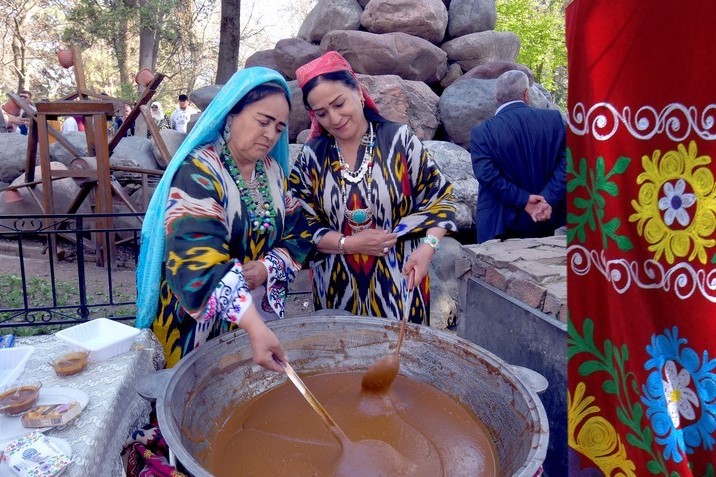
Preparation for Nowruz in Tajikistan. Source: MIA Tajikistan
Diplomatic Events:
The celebration of Nowruz (Nauryz) served as a focal point for regional diplomacy as leaders across Central Asia exchanged high-level congratulations and emphasized national unity. President Kassym-Jomart Tokayev received dozens of messages from foreign heads of state, using the occasion to reiterate his "Taza Kazakhstan" (Clean Kazakhstan) initiative, which links environmental stewardship with national renewal (Orda, Orda). In Kyrgyzstan, President Sadyr Japarov received similar diplomatic niceties from international partners, highlighting the holiday’s role in reinforcing regional cultural bonds (24.kg). Meanwhile, Uzbekistan’s President Shavkat Mirziyoyev marked the occasion by linking the values of Nowruz with the upcoming Eid al-Fitr, stressing the importance of social harmony and the "unity of the people" during a period of significant regional transition (Daryo).
Following the overwhelming approval of the national referendum, President Tokayev signed a decree officially bringing Kazakhstan’s new Constitution into force (Orda). The Central Election Commission (CEC) confirmed the final results, noting a high voter turnout that validated the shift toward a more balanced "normative" republic (Orda). To mark the document's adoption, the President announced a broad criminal and administrative amnesty for certain categories of offenders, framed as a gesture of national reconciliation (Orda.kz). Legal experts noted that the new framework introduces rigorous protections for the personal data of Kazakhstanis, establishing a more transparent digital governance model that aligns with international standards for privacy and individual rights (Tengri News).
The constitutional reform received widespread international recognition, with world leaders signaling their support for Kazakhstan’s political trajectory. Russian President Vladimir Putin congratulated Tokayev, confirming the strategic importance of an upcoming state visit in May (Orda). Similar messages were received from Uzbekistan’s President Shavkat Mirziyoyev, the latter of whom praised the successful holding of the referendum as a testament to the country’s stability (Tengri News). Such diplomatic endorsements underscore Kazakhstan's "multi-vector" foreign policy, maintaining constructive relations with diverse global actors while implementing significant internal structural changes (Tengri News).
In a high-profile visit to Beijing, Gurbanguly Berdimuhamedov, the National Leader of the Turkmen people, held extensive talks with Chinese President Xi Jinping to deepen the "comprehensive strategic partnership" between the two nations (Turkmenportal). The discussions focused on energy security and the expansion of the "One Belt, One Road" initiative, punctuated by a meeting with the Chairman of the China National Petroleum Corporation (CNPC) to discuss long-term gas cooperation (Turkmenportal). As a symbol of bilateral friendship, President Xi was presented with an Ahal-Teke horse on behalf of the President of Turkmenistan. These engagements, complemented by further consultations between the Foreign Ministries, reinforce China’s role as Turkmenistan’s primary economic and energy partner (MFA Turkmenistan).
Macroeconomics outlook:
Kazakhstan has officially entered the world’s top 40 economies as measured by GDP at Purchasing Power Parity (PPP), according to recent international economic assessments (Orda). This milestone reflects the country’s sustained growth and its increasing weight in the global economy, driven by structural reforms and a robust extractive sector. In the domestic trade sector, a detailed analysis of fiscal contributions revealed that a select group of major retail and wholesale corporations paid the highest volume of taxes, highlighting the concentration of economic activity within the country’s commercial hubs (Orda). These tax revenues are critical for the government’s efforts to balance the national budget while funding the ambitious social and infrastructure projects outlined in the "New Kazakhstan" agenda.
In a significant development for the country’s export strategy, the United Kingdom has formally allowed Kazakhstani oil shipments to transit through Russian territory despite broader sanctions regimes (Orda). This decision provides a vital lifeline for Kazakhstan's energy exports, ensuring that crude oil can reach international markets via the Caspian Pipeline Consortium (CPC) and other traditional routes without violating international law. By securing this regulatory clarity, Kazakhstan maintains its position as a reliable global energy supplier while navigating the complex geopolitical tensions affecting the Eurasian continent. This pragmatic approach to trade diplomacy remains a cornerstone of the country’s macroeconomic stability, protecting its primary revenue stream from external political volatility.
Water, Food, and Energy:
Uzbekistan’s commitment to the Green Transition has yielded a significant 43% increase in green power generation over the past year, marking a record expansion of the country's renewable energy capacity (UzDaily). This surge is primarily attributed to the commissioning of several large-scale solar and wind projects, which have reduced the national grid's reliance on thermal power plants and lowered carbon emissions. To sustain this momentum, the Uzbek government has entered into a new strategic agreement with China’s Anhui Conch New Energy to advance cooperation on high-tech green energy infrastructure, including the development of advanced energy storage systems and integrated renewable power hubs (Daryo). These partnerships are central to Tashkent’s goal of sourcing 25% of its electricity from renewable energy by 2030, leveraging international expertise to modernize the national energy mix.
The environmental agenda has also expanded into industrial circularity and biodiversity conservation. Uzbek officials recently held bilateral talks with Chinese partners to discuss the implementation of tire recycling technologies and the production of carbon black, a move aimed at reducing industrial waste and fostering a more sustainable manufacturing sector (UzDaily). Beyond industrial reform, the Cabinet of Ministers has established new, stringent rules for the classification and protection of natural heritage sites (Daryo). This regulatory framework introduces a multi-tier system for identifying vulnerable ecosystems, ensuring that the country’s natural landscapes are shielded from the pressures of rapid urbanization and industrial expansion. By balancing aggressive energy targets with enhanced conservation laws, Uzbekistan is aligning its domestic environmental policy with global sustainability standards.
Security:
Central Asian states have mobilized a coordinated humanitarian response to the escalating crisis in the Middle East, establishing a corridor for aid to Iran. The Republic of Tajikistan dispatched a significant shipment of humanitarian assistance, including food and basic necessities, to the Iranian people as a gesture of regional solidarity (MFA Tajikistan). This effort was mirrored by Uzbekistan, which delivered a large-scale aid package to Tehran to alleviate the growing humanitarian pressure (Daryo). In a notable display of logistical integration, Turkmenistan ensured the seamless transit of the Uzbekistani humanitarian cargo across its territory (Turkmenportal). These regional contributions coincide with the arrival of extensive Russian aid shipments via Eurasian transport networks (The Moscow Times) and additional support from Azerbaijan (Turkmenportal). This collective action reflects a strategic intent among Central Asian capitals to maintain regional stability and prevent a total humanitarian crisis that could trigger unpredictable spillover effects.
The deepening Middle East crisis has also prompted immediate domestic security measures within the Kyrgyz Republic. President Sadyr Japarov convened an emergency session of the Security Council to evaluate the multifaceted risks posed to national interests, specifically focusing on the potential for economic and social disruptions (24.kg). As a direct result of these deliberations, Kyrgyz authorities have temporarily suspended all Umrah pilgrimage trips to Saudi Arabia, citing the extreme volatility of regional airspace and the safety risks to citizens traveling through the conflict zone (AKIpress). These preventative measures signal a heightened state of alert in Bishkek, as the government seeks to protect its citizens and domestic stability from the direct impact of the ongoing conflict.