
The second week of January 2026 was marked by a decisive shift from holiday-period directives to the formal codification of national security and economic transparency measures. In Kazakhstan, President Tokayev utilized the early days of the year to enact a massive legislative overhaul via the "Digital Code," while simultaneously addressing systemic failures within the military following a series of high-profile tragedies. Regionally, the narrative was dominated by an intensifying energy crisis; Uzbekistan issued urgent production mandates for natural gas to combat winter shortages, while Kyrgyzstan and Tajikistan faced critical infrastructure audits. Environmental concerns reached a peak as persistent thermal inversions in urban centers forced a re-evaluation of industrial emissions and cross-border water management strategies for the coming spring.
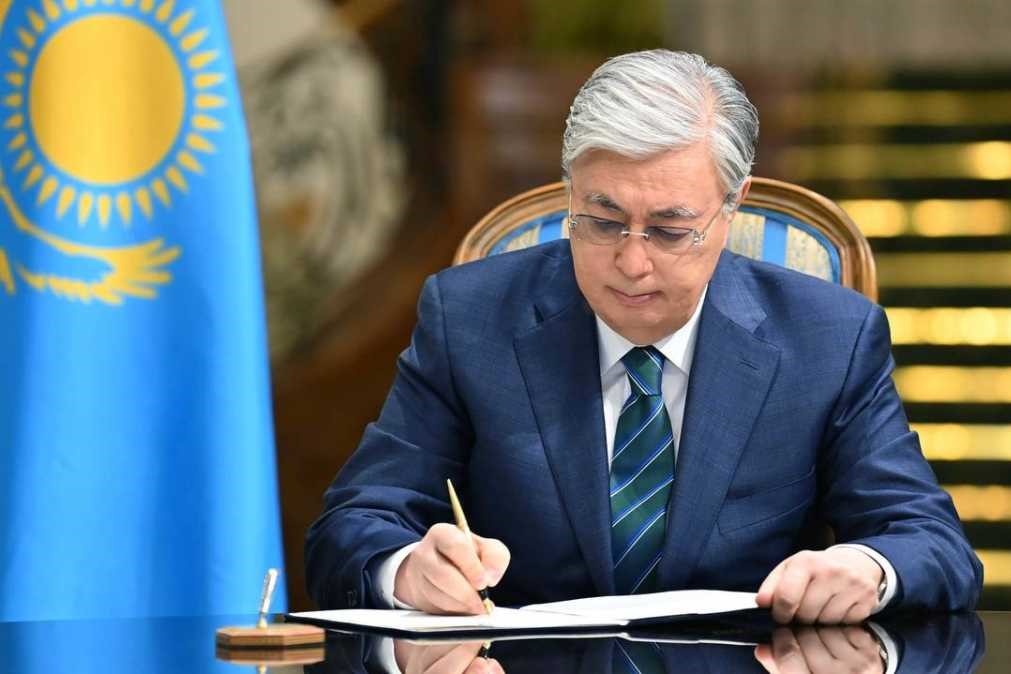
Digital Code of the Republic of Kazakhstan signed by President Tokayev. Source: Zakon
Economic Policy, Trade, and Finance
The most significant domestic event of the week occurred on January 9, when President Tokayev signed the comprehensive Digital Code of the Republic of Kazakhstan. This legislation amends over 120 laws to digitize state guarantees and strictly prohibit state incentives for "sinful industries" like gambling and lotteries, channeling investment instead toward industrial manufacturing (Zakon.kz). Simultaneously, Uzbekistan’s President Shavkat Mirziyoyev addressed the mounting energy deficit by ordering state-owned Uzbekneftegaz to increase daily gas production to 70 million cubic meters to ensure a minimum 2026 output of 25.4 billion cubic meters (KUN.UZ).
Climate Change and Environmental Sustainability
Environmental security became a matter of emergency governance this week. A "thermal inversion" crisis blanketing Bishkek and Tashkent led to hazardous air quality, with Bishkek consistently ranking in the top five most polluted cities globally between January 7 and 10 (24.kg). This atmospheric stagnation forced the Uzbek Ministry of Ecology to launch city-wide raids on industrial polluters. In the agricultural sector, hydrologists in Kyrgyzstan and Tajikistan warned of a projected 20% water deficit for the 2026 season, prompting Kazakhstan to accelerate the "Northern Aral Sea Recovery Plan" and seek new regional water-sharing protocols to avoid conflict during the spring planting season.
Digital Transformation and Infrastructure
Digitalization has moved from an administrative goal to a legislative requirement. Beyond Kazakhstan’s Digital Code, the government announced plans to phase out physical "Public Service Centers" (TSONs) in favor of fully automated "Digital Offices" starting this week (Zakon.kz). In other news, The Council of the Eurasian Economic Commission (EEC) adopted a number of decisions establishing rules for the import of goods purchased by individuals on foreign marketplaces. According to the EEC website, the duty-free import threshold is set at 200 euros, and if the purchase price exceeds this amount, a customs duty of 5% on top of the VAT rate, but not less than €1 per kilogram, will be charged (Zakon).