
The first full week of 2026 in Central Asia was defined by a transition from holiday directives to the rigorous implementation of "green" economic policies and digital legislative overhauls. A primary narrative focus has been the synchronization of regional efforts to combat the dual challenges of systemic corruption and climate-induced environmental crises. In Kazakhstan, the signing of the landmark "Digital Code" signaled a move toward a more transparent, algorithmic governance model. Simultaneously, Uzbekistan and Kyrgyzstan have been forced to balance industrial growth with public health as severe smog events triggered emergency ecological protocols. The week's developments underscore a region-wide push to modernize institutional "software" while grappling with the deteriorating "hardware" of the natural environment
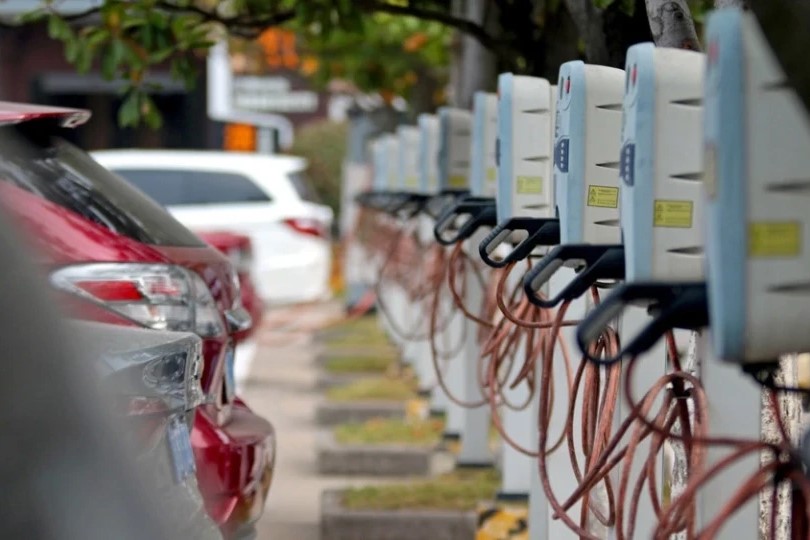
In Uzbekistan, electric charging stations and their components will be exempt from customs duties. Source: Open.Kg
Diplomacy and Connectivity
The week saw a significant focus on the "Middle Corridor" and the strengthening of regional logistics hubs. In an extensive interview published on January 5, President Kassym-Jomart Tokayev framed Kazakhstan’s current trajectory as a "new stage of modernization," emphasizing the country's role as a bridge for international cooperation and the necessity of adapting to a more fragmented global economy (Zakon.kz). This diplomatic sentiment was reinforced by the official reception of several new foreign ambassadors, including those from the United States and Bulgaria, signaling a continued commitment to a multi-vector foreign policy (Interfax.kz). Regional integration efforts also extended to the digital sphere, with Tajikistan and Uzbekistan finalizing a year-end review of bilateral cargo transport coordination, aiming to streamline paperless trade through 2026 (Frank.uz).
Security and Defense Cooperation
The year began with a somber assessment of military discipline and strategic readiness in Kazakhstan. On January 5, President Tokayev issued a stern directive regarding the recurring issue of soldier safety and fatalities within the armed forces, labeling such incidents "unacceptable in peacetime" and demanding immediate systemic changes from the military leadership (Zakon.kz). This focus on internal discipline is paired with a broader effort to modernize the defense apparatus; the President emphasized that the 2026 agenda must involve adapting the military to a "new era" of technological warfare and regional instability (Tengrinews.kz). Meanwhile, in Kyrgyzstan, the defense sector faced its own internal tragedy as reports surfaced of a young conscript’s suicide in the Jalal-Abad region, fueling a renewed public debate across the Kyrgyz media regarding the treatment of military personnel (Akipress.org). This incident has underscored the regional challenge of professionalizing the military while maintaining strict human rights standards.
Climate Change and Environmental Sustainability
Central Asia is currently grappling with severe atmospheric issues. A "thermal inversion" has settled over major cities, trapping industrial and vehicular pollutants at the breathing level. In Uzbekistan, this has resulted in toxic smog levels, prompting the Ministry of Ecology to launch emergency "ecological raids" and partially suspend operations at facilities failing to meet emission standards. The crisis is equally acute in Kyrgyzstan, where Bishkek has consistently ranked among the most polluted cities globally during this reporting period. The smog has forced a public debate on the transition away from coal heating, as the current index values are deemed hazardous for the entire population (24.kg).
Simultaneously, the region is bracing for a water-scarce year. Reports from agriculture ministries indicate that current snowpack levels in the mountains are insufficient to meet the irrigation quotas planned for 2026, leading to discussions about revising water-sharing agreements between Kazakhstan and Uzbekistan (Open.kg).
Economic Policy and Digital Transformation
Kazakhstan made a landmark leap in economic regulation on January 9 with the presidential signing of the "Digital Code" and a massive set of amendments affecting 121 different laws. This legislative package is designed to modernize the transport and entrepreneurship sectors by digitizing state guarantees and monitoring systems, effectively removing the "human factor" that has historically facilitated corruption (Zakon.kz). Simultaneously, the Kazakh government is moving to replace traditional public service centers (TSONs) with "Digital Offices," a move that will require local administrations to fundamentally rethink their service delivery models by mid-2026 (Zakon.kz). In Uzbekistan, the focus remains on fiscal formalization; as of January 2026, the transition to unified QR-code payment systems for all businesses has become a mandatory pillar of the state's anti-shadow economy strategy. While the government offers "green" tax breaks for EV charging infrastructure, the primary focus is now on ensuring every transaction is digitally traceable by the State Tax Committee.