
The penultimate week of 2025 was marked by a historic "Tokyo Pivot," as the leaders of all five Central Asian nations converged in Japan for the first-ever Central Asia + Japan Summit. This week represented a transition from purely regional diplomacy to a broader strategic partnership with Japan, focused on high-tech connectivity, green energy transition, and human capital. While the heads of state were in Tokyo, the domestic front saw the finalization of monumental infrastructure and border agreements. Notably, the China-Kyrgyzstan-Uzbekistan (CKU) railway project secured its primary financing, and the trilateral border junction between Kyrgyzstan, Tajikistan, and Uzbekistan was officially ratified. This period cemented the region's 2026 trajectory: a focus on "Green Resilience" and the hardening of legal and physical infrastructure.
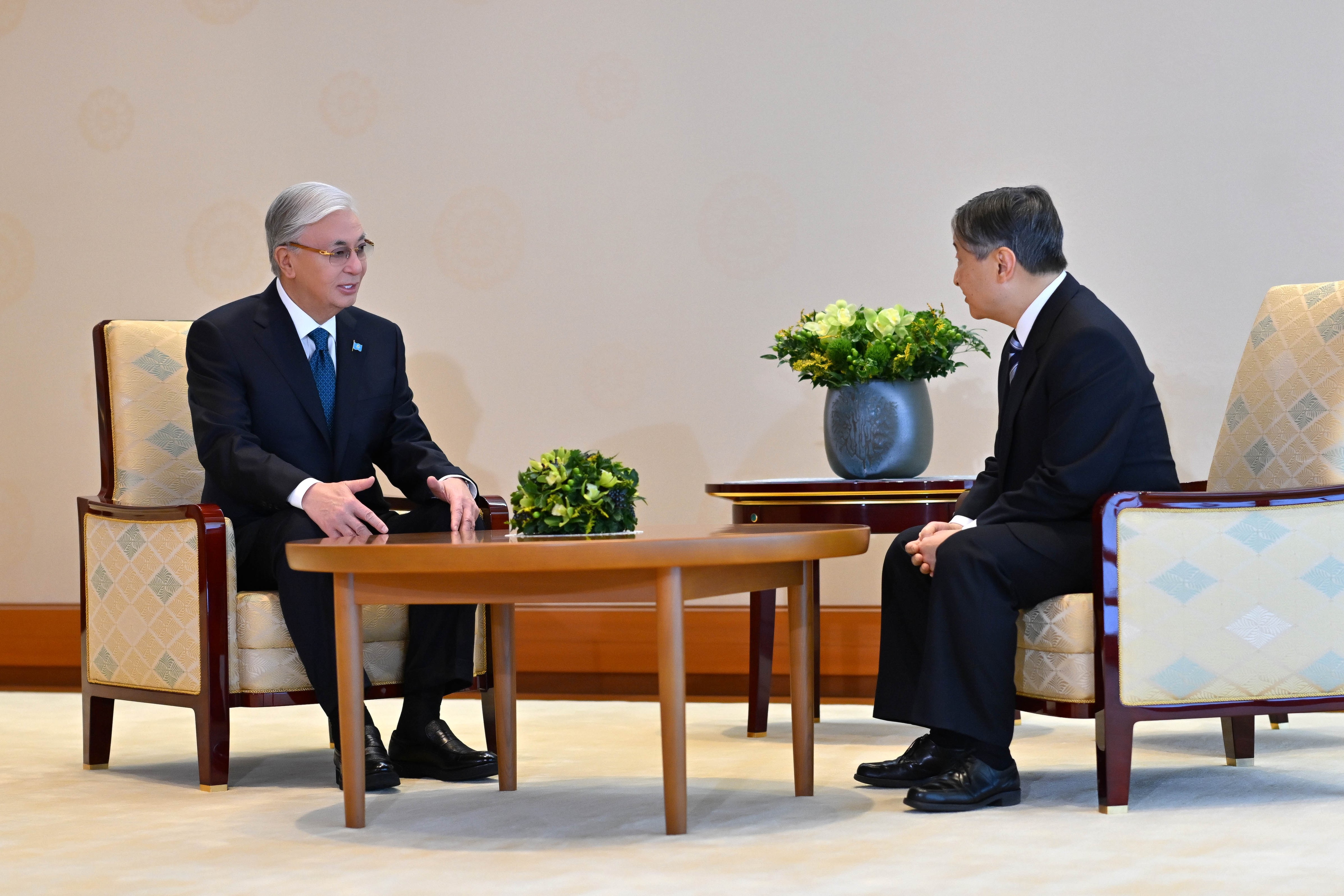
The first official visit of President Kassym-Jomart Tokayev to Japan began with a meeting with Emperor Naruhito. Source: Akorda
Diplomacy and Connectivity
The defining narrative of the week was the official visit of President Kassym-Jomart Tokayev and President Shavkat Mirziyoyev to Tokyo from December 18–20. President Tokayev’s visit began with a meeting with Emperor Naruhito, where he praised Japan’s "discipline and resilience" as an inspiration for Kazakhstan’s own modernization path (Akorda.kz). The summit concluded with the Tokyo Declaration, identifying "Green and Resilience," "Connectivity," and "Human Resource Development" as the three pillars of the new partnership. Japan specifically committed to upgrading the Middle Corridor and providing advanced cargo-scanning technology to Aktau and Baku ports (MOFA Japan). Parallel to the summit, on December 15, a syndicate of Chinese banks approved a massive $2.3 billion loan for the construction of the China-Kyrgyzstan-Uzbekistan (CKU) railway, a 35-year repayment project that is expected to revolutionize regional land-based trade (Asia-Plus).
Economic Policy, Trade, and Finance
As the year drew to a close, the focus shifted toward sustainable mobility and fiscal stability. In Tashkent, the BYD e-Mobility Festa 2025 took place on December 15, showcasing Uzbekistan’s rapid adoption of electric vehicle technology and sustainable urban transport solutions (WeProject). Economically, Uzbekistan reported a drop in annual inflation to 7.3% in December, a significant decrease from the previous year, despite seasonal food price hikes (Daryo.uz). In Kazakhstan, however, business expectations "cooled" significantly in late December; the National Bank reported an Index of Business Activity (IDA) of 49.9, hovering on the edge of stagnation as enterprises cited structural constraints and high tax loads as primary concerns for the 2026 outlook (Zakon.kz).
Climate Change and Environmental Sustainability
Environmental news was intertwined with Japan’s "Green and Resilience" commitments. During the Tokyo summit, agreements were finalized for the construction of two small hydropower plants on the Chon-Kemin River in Kyrgyzstan and a 100-MW solar plant in cooperation with Muroo Systems Corporation (UzEmbassy). Domestically, Uzbekistan celebrated a milestone as its renewable energy capacity generated a record 10 billion kWh by early December, providing a buffer against the winter energy deficit (Asia-Plus). However, immediate climate challenges persisted in the Fergana Valley, where ministers from Kyrgyzstan, Tajikistan, and Uzbekistan met to finalize water-sharing protocols at the newly ratified border junction points to ensure agricultural stability for the 2026 growing season (Qazinform).
Digital Transformation and Infrastructure
Japan’s "Human Resource Development" pillar directly targeted the region’s digital gap. Plans were unveiled in Tokyo for a Central Asian Digital Academy, with Japan providing AI, automation, and cybersecurity training to specialists across the five nations (UzEmbassy). In Kyrgyzstan, the week saw the initiation of a project to concrete the Big Chui Canal; this €37 million infrastructure project aims to halve water losses through digital monitoring and modern lining techniques, addressing one of the country's most significant irrigation inefficiencies (24.kg).
Security and Defense Cooperation
The security narrative was dominated by the resolution of the "junction point" where the borders of Kyrgyzstan, Tajikistan, and Uzbekistan meet. On December 15, the foreign ministers of the three countries finalized the ratification of the border crossing point agreement, a move hailed as a "historic breakthrough" for the Fergana Valley that effectively ends decades of territorial ambiguity (Qazinform; ERI). In Kazakhstan, security was also addressed through an "internal lens," as President Tokayev visited the Meiji Jingu Shrine in Tokyo, noting the "unbreakable unity and national identity" of the Japanese people as a model for Kazakhstan’s own social cohesion efforts (Akorda.kz).